Featured in YOURSTORY
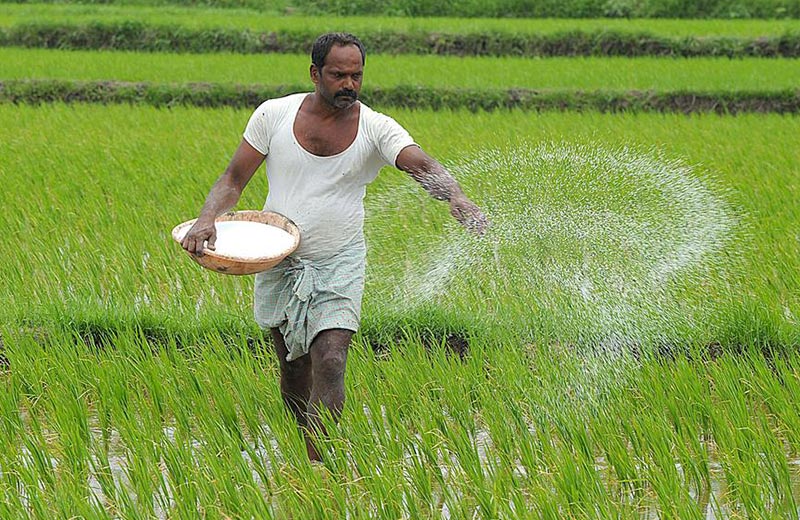
Several players in the agritech space are developing farm-specific, data-driven diagnostics to help farmers accelerate their growth journeys.
It is common knowledge that India has one of the largest agricultural populations in the world, with over 43% of the workforce engaged in this sector.
During the second wave of the pandemic, agrarian communities in rural India had to bear the brunt of stricter and longer lockdown measures. In fact, smallholder farmers lost a significant chunk of their incomes when supply chains were not working at full capacity.
As the country looks forward to getting back on track post the second wave of the pandemic, it has become more important than ever to boost farmers’ income and ensure that farm productivity is at an all-time high.
In line with this, one of the key objectives of the Government of India has been to double farmers’ incomes by 2022, by driving strategic private sector investment and participation in agriculture. Additionally, in order to help the sector prosper in the coming year, ensuring the benefits of digitalisation penetrate to the grassroots will be important.
How can technology pave the way for Atmanirbhar Krishi?
Over the past decade, there has been increasing awareness about the digital advancements in the farming community. However, a large segment of the industry remains scattered and unorganised.
This in turn has caused several legacy bottlenecks, including unavailability of raw materials, lack of access to financial solutions, disruption by multiple intermediaries present across the value chain, supply chain inefficiencies, lower farmer income, and low digital adoption.
Recognising these challenges, the government and industry has launched various interventions aimed at helping the farming community. e-Nam by the Central Government, e-Choupal by ITC, Agri Elevate by Samunnati, mKrishi by Tata Consultancy Services and Trringo by Mahindra & Mahindra are some noteworthy examples.
Similarly, several players in the agritech space are developing farm-specific, data-driven diagnostics to help farmers accelerate their growth journeys. Educating farmers about the use of data analytics, AI, IoT-enabled devices, and drone technologies is also important in the current times.
For example, depletion of groundwater resources and rainfall in many parts of India has necessitated the use of data-driven precision technologies to ensure efficient resource utilisation.
Another example is how startups like Kheyti have been working towards bringing the benefits of greenhouse-in-a-box solutions to farmers across India. Their efforts are aimed at enabling Climate Smart Agricultural practices in India, while also helping farmers with small landholdings to enhance productivity by 4x and 5x.
With the advent of farming-as-a-service, mechanisation and automation, as well as biotech, technology has started making steady inroads into the Indian agricultural ecosystem and benefiting smallholder farmers.
What’s in store for the agritech sector in the coming years?
Leveraging emerging technologies like AI, ML, IoT, and SaaS can address various challenges and pain points throughout the agri value chain. In fact, it is estimated that only 1 percent of the market potential agritech holds has been utilised. This means there is immense opportunity for the agritech sector to expand and deliver the benefits of digitalisation to the smallholder farmer.
Supportive policy frameworks towards investment, skill development, and innovation from the government will be key to help the farming communities in India become self-sufficient.
Recently, the government announced a separate ministry for cooperatives at a national level to empower cooperatives to play an important role propagating Atmanirbhar Abhiyan. This is a welcome move as encouraging cooperative movements will empower the farming community to discover synergies beyond conventional methods.
Further, collaboration between FPOs, agri-enterprises, startups, and established players will be vital to make #AtmanirbharKrishi a reality.
About the Author

Nitin Chaudhary, Head – Strategy and Innovations, Samunnati
With over 10 years of experience in financial services for low-income households, Nitin has worked with VISA, Micro Pension Foundation and IFMR.